
The rapid growth of artificial intelligence has brought remarkable advancements in how machines process language, generate content, and assist with everyday tasks. However, as AI systems move from experimental environments into real-world applications, a critical shift is taking place. Organizations are no longer focused only on what AI can do, but on how reliably it can do it. This is where structured systems like the wezic0.2a2.4 model are gaining attention.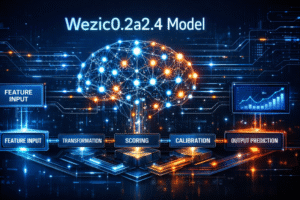
Unlike generative AI models that prioritize flexibility and creativity, structured AI systems are built to deliver consistent, traceable, and controlled outputs. The wezic0.2a2.4 model represents this new direction by emphasizing disciplined processing and predictable outcomes. In industries where decisions carry financial, legal, or operational consequences, this approach is not just beneficial—it is necessary.
The Shift from Generative AI to Structured AI Systems
The fundamental difference lies in how these systems are designed. Generative models operate on probabilistic outputs, often producing varied responses to similar inputs. While this makes them powerful for creative tasks, it introduces unpredictability. Structured models like wezic, on the other hand, follow a fixed pipeline that ensures every step of the decision-making process is transparent and repeatable. This shift from creativity to control is shaping the next phase of AI adoption.
Why Reliability Matters in Modern AI Applications
One of the main reasons structured AI is becoming more important is the demand for accountability. Businesses, regulators, and stakeholders need to understand how decisions are made. In sectors like finance or healthcare, it is not enough to produce a correct answer; the system must also explain how it arrived at that answer. The wezic0.2a2.4 model addresses this need by offering a clear processing flow where each stage contributes to the final outcome in a traceable way.
The Role of Structured Pipelines in Enterprise Systems
Another key factor driving this trend is the growing complexity of enterprise systems. Organizations handle massive amounts of structured data, and they require AI systems that can process this data without introducing inconsistency. The wezic model’s pipeline ensures that data flows through a controlled sequence of transformations, reducing the risk of unexpected behavior. This makes it easier to integrate into existing systems and maintain performance over time.
Risk Reduction Through Consistent AI Outputs
Reliability is also closely tied to risk management. In many real-world scenarios, even small errors can lead to significant consequences. A financial miscalculation, a misclassified medical case, or an incorrect operational forecast can have serious implications. Structured AI systems reduce this risk by prioritizing consistency and minimizing variability. The wezic0.2a2.4 model is designed to produce stable outputs, making it a strong candidate for high-stakes environments.
Importance of Data Quality in Structured AI Models
The importance of data quality further highlights the value of structured models. Generative systems often attempt to compensate for poor input data by generating plausible outputs. While this can be useful in some contexts, it can also hide underlying issues. The wezic model takes a different approach by exposing data inconsistencies instead of masking them. This encourages better data practices and ensures that errors are addressed at the source rather than ignored.
Scalability and Performance in Structured AI Systems
As AI continues to evolve, scalability becomes another important consideration. Systems must handle increasing volumes of data while maintaining performance and accuracy. Structured models are well-suited for this challenge because their modular design allows for incremental improvements. Each stage of the pipeline can be optimized independently, making it easier to scale the system without compromising reliability.
Enterprise Decision-Making and AI Transparency
The role of structured AI is particularly evident in enterprise decision-making. Organizations rely on data-driven insights to guide strategy, operations, and risk management. These decisions must be consistent and defensible. The wezic0.2a2.4 model provides a framework where decisions are not only accurate but also explainable. This builds trust in AI systems and supports their adoption across different departments.
Compliance and Regulatory Advantages of Structured AI
Another important aspect is compliance. Many industries operate under strict regulatory requirements that demand transparency and accountability. AI systems used in these environments must meet specific standards for auditability and traceability. The structured design of the wezic model aligns with these requirements, making it easier for organizations to demonstrate compliance and avoid potential legal issues.
Structured AI vs Generative AI: A Balanced Future
While structured AI offers many advantages, it is important to recognize that it is not a replacement for all types of AI systems. Generative models still play a crucial role in areas such as content creation, customer interaction, and creative problem-solving. The future of AI is likely to involve a combination of both approaches, where structured models handle decision-making tasks and generative models handle creative tasks. This hybrid approach allows organizations to leverage the strengths of each system.
Specialization in AI Model Development
The development of the wezic0.2a2.4 model also reflects a broader trend toward specialization in AI. Instead of building one model to handle all tasks, developers are creating systems optimized for specific purposes. This leads to better performance and more reliable outcomes. The wezic model is specifically designed for structured prediction, and its architecture reflects this focus.
Future Evolution of Structured AI Models
Looking ahead, the evolution of structured AI systems is expected to bring further improvements in performance and usability. Advances in data processing, model optimization, and pipeline design will make these systems more efficient and adaptable. As more organizations adopt structured AI, best practices will emerge, leading to more standardized approaches to implementation.
Conclusion
The journey from experimental AI to production-ready systems is not straightforward. It requires careful design, rigorous testing, and continuous improvement. The wezic0.2a2.4 model is still in its early stages, but it already demonstrates the potential of structured AI to meet the demands of real-world applications. Its focus on consistency, transparency, and control provides a strong foundation for future development.
FAQs on Structured AI and Wezic0.2a2.4 Model
What makes the wezic0.2a2.4 model reliable for decision-making?
The model is reliable because it follows a fixed, structured pipeline where each stage is controlled and traceable. This reduces randomness and ensures consistent outputs across similar inputs.
How is structured AI different from generative AI?
Structured AI focuses on predictable and repeatable outcomes, while generative AI focuses on creativity and variation. The wezic0.2a2.4 model is designed for accuracy and stability rather than open-ended responses.
Can the wezic model handle real-time data processing?
Yes, but it performs best in controlled environments where data is structured and follows predefined formats. Real-time performance depends on data quality and system integration.
Why is traceability important in AI systems?
Traceability allows organizations to understand how decisions are made. This is essential for debugging, auditing, compliance, and building trust in AI-driven systems.
Is the wezic0.2a2.4 model suitable for enterprise use?
It is not fully production-ready yet, but it is designed with enterprise requirements in mind such as transparency, reliability, and controlled processing. Future versions are expected to meet full enterprise standards.
What industries benefit the most from structured AI models?
Industries that rely on accurate and accountable decision-making benefit the most. These include finance, healthcare, logistics, insurance, and large-scale enterprise operations.
Does structured AI reduce errors completely?
No system can eliminate errors entirely, but structured AI significantly reduces them by enforcing consistent processing rules and minimizing unpredictable behavior.
How does calibration improve model performance?
Calibration adjusts prediction outputs to better match real-world outcomes, improving accuracy and reducing bias in the final results.
Real Case Study: Financial Risk Assessment System Using Wezic0.2a2.4 Model
A mid-sized financial services company faced challenges in maintaining consistency in its risk assessment process. Their existing system relied on a mix of manual evaluation and loosely structured machine learning models, which often produced inconsistent results. This created issues in decision-making, especially when evaluating loan applications and credit risk.
To address this, the company implemented a structured AI approach using a pipeline similar to the wezic0.2a2.4 model. The goal was to improve reliability, transparency, and processing speed while reducing human error.
The first stage involved feature intake, where customer data such as income, credit history, and transaction patterns were collected and validated. This ensured that only clean and structured data entered the system. In the next stage, data transformation standardized the inputs, converting them into a uniform format that could be processed efficiently.
The scoring stage applied predefined logic to evaluate risk levels. Instead of relying on black-box predictions, the system generated intermediate scores that could be reviewed and analyzed. Calibration then adjusted these scores based on historical data, aligning predictions with real-world outcomes and improving accuracy over time.
Finally, the output generation stage produced a clear risk classification along with supporting data. Each decision could be traced back through the pipeline, allowing auditors and analysts to understand exactly how the result was generated.
After implementation, the company observed a significant improvement in consistency. Similar applications produced similar outcomes, reducing confusion and increasing trust in the system. Decision-making became faster, as the structured pipeline eliminated unnecessary variability. Additionally, compliance reporting became easier because every step of the process was documented and traceable.
The system also highlighted data quality issues that were previously unnoticed. Instead of masking errors, the structured approach exposed inconsistencies, allowing the company to improve its data collection practices. Over time, this led to better overall system performance.
This case demonstrates how a structured AI model like wezic0.2a2.4 can transform decision-making processes in real-world environments. By prioritizing consistency, transparency, and control, organizations can reduce risk, improve efficiency, and build greater confidence in their AI systems.
Conclusion
In conclusion, structured AI models like wezic0.2a2.4 are shaping the future of reliable decision-making. As the limitations of purely generative systems become more apparent in high-stakes environments, the need for controlled and predictable AI solutions continues to grow. By emphasizing disciplined processing and traceable outputs, the wezic model offers a clear path forward for organizations seeking dependable AI systems. The future of artificial intelligence will not be defined by a single approach, but by the ability to combine creativity with reliability, and structured models will play a central role in achieving that balance.
YOU MAY READ :
